


The BOOTE EXCLUSIV editorial team regularly meets exciting people who are realising their dream yacht. Many of these enthusiasts are passionate about being on board and using their boats, like Tom Schröderfor wonderful journeys.
In all these years, we have never met an owner who steers his 50-metre yacht himself and takes command of his custom-built boat as captain. Until now. We wanted to find out from "Cinderella Noel IV" owner Konrad Schnyder how this came about and what drives him and his wife Trudy.
Also interesting:
You used to be an ambitious regatta sailor - what prompted you to switch from sailing to motor yachts?
I was a passionate regatta sailor for many years - wind, sail trim and the eternal struggle with the elements characterised me. But the longer I sailed, the more I realised that my true love lies not just in sailing itself, but in the sea.

Over the years, my desire for more predictability grew. A motor yacht gives me the opportunity to determine my course, even if the wind changes its mind. And it opens up greater distances for me - distances that I couldn't cover in the same way with a sailing boat. In the end, it wasn't a farewell to sailing, but a natural progression.
How did your many years of experience in water sports influence the planning and construction of the "Cinderella Noel IV"?
My experiences had a major influence on the creation of our "Cinderella Noel IV". When you spend so many years on the water, you learn what really matters - not in theory, but in all weathers and on your own body.
It was clear to me right from the start that the hull had to be made of steel. This not only gives the yacht enormous stability, but also a seaworthiness that is absolutely essential in northern waters. Steel is forgiving where other materials quickly reach their limits - and as an old regatta sailor, I appreciate the reassuring feeling that this ship can take a beating.
At the same time, it was important to me that we have the latest navigation technology. Modern radar and navigation systems, precise electronic nautical charts, reliable sensor technology - none of this is a luxury for me, but part of good seamanship. I wanted a bridge on which you could rely on yourself and your instruments at all times, even in poor visibility or bad weather.
And then there's another point that you only really learn to appreciate over the years: comfort on board. Not as a frill, but as a prerequisite for long cruises. A warm, quiet ship, good sleeping areas, well-designed rooms - all these things help us to really enjoy the journey.
What was the decisive moment when you decided to build a 50-metre ship?
The decisive moment didn't come in the office, on the drawing board or in a shipyard, but out on the water - exactly where the best decisions are made. After the christening of the "Cinderella Noel III", my wife Trudy and I sailed out of the Oslo Fjord on our 35-metre yacht at the time. No crew, just Trudy and me on the bridge. The Oslofjord was at its most beautiful and I could hardly get enough of the scenery.
I said at the time: "You know, my darling, we love these waters so much ... When I'm older, I'm going to have a 50-metre steel yacht built for the rough waters." She just looked at me, smiled and said: "Why do you want to wait until you're 80? Why not start planning now?" That was the moment it clicked. After all, I had long known that a steel hull and a length of 50 metres are exactly what it takes to sail the North Sea, with all its vagaries, with real aplomb. And that's how a side note in the wheelhouse turned into a decision for life.
Your wife was involved in the design from the very beginning - how did you divide the tasks between you?
When you have a yacht like the "Cinderella Noel IV" built - a ship that is not only technically impressive, but should also reflect our personal attitude to life - it can only be done in partnership. And in two directions: within the family and together with the shipyard. My wife and I clearly divided up the tasks from the outset so that we would have a boat that functions exactly as we want it to. I was responsible for navigation, technology and the wellness area. The interior design was entirely up to my wife. She has a special talent for giving a ship warmth and character - so that you feel at home even on the high seas. On the other hand, we always sat down at the table together to organise the rooms. Both sides were needed: practical seamanship and an eye for living.
The same applied to the collaboration with the shipyard. We worked in partnership right from the start - open, respectful and solution-orientated. Everyone knew what was important to them and we took each other seriously. The result: we only had to make one small change during the entire construction phase - in the fitness room. For a 50-metre displacer, that's almost a minor miracle. But it's actually the result of good teamwork: between my wife, myself and a shipyard that understood our vision. Of course, professional construction
supervision is also part of it.
Why was the Dutch shipyard Heesen chosen in the end?
Choosing the shipyard was a matter close to my heart. When I visited Heesen for the first time - on a Sunday, at short notice - I immediately realised that the atmosphere here was just right. You can feel a mixture of traditional craftsmanship, precision and a real passion for yacht building. Then came the quotation phase - and that finally convinced me. Professional, timely and to the point. No empty promises, no delays, but a clear, structured way of working. Exactly what you expect as a future owner, but don't get everywhere.
And a third point was crucial for me: Heesen responded to my special requests without hesitation and without letting me feel that I was thinking "outside the box". Regardless of whether it was technical features, special equipment or individual ideas about space - I was understood and taken seriously. I build a yacht for myself, which I sail myself and carry an important passenger. This kind of collaborative partnership is worth its weight in gold in such a complex project.
You developed "Cinderella Noel IV" from scratch and for yourself - which of your personal ideas were particularly influential in the design?
I took my ideas to various shipyards, always with the desire to build a ship that suited me: modern, seaworthy and yet with classic lines. The decisive moment came at Heesen. They presented us with a design proposal that immediately fascinated us. The shape was modern, but not fashionable - and at the same time it had something wonderfully traditional about it. To be honest, I was initially more on the trendy side: straight stems, clean lines, a more contemporary look. But Trudy wasn't impressed by my vision. She has a much better eye for proportions than I do. And when I saw this beautiful, powerful bow bulge below the waterline, I knew: that's it. The bow had soul. This detail changed the character of the whole yacht - and I suddenly understood why modern trends are not always the right direction.
You are captaining the yacht yourself. Did you have any specific requirements regarding the bridge technology and the layout of your yacht?
Yes, definitely, after all I'm at the helm myself. It was important to me that every nautical instrument was positioned exactly where I needed it when I was at sea. I had a clear specification, knew exactly which devices belonged on board and how they should be arranged. Nevertheless, I consulted with specialists and the shipyard again and again. They have experience from dozens of projects and I took their assessments very seriously. In the end, I made the decisions - but on a solid professional basis.
What did you pay particular attention to?
The most important thing for me was that all the instruments had to be adapted to my body size and the way I work. Especially at the wing stations, I wanted my body and the boat to form a single unit when manoeuvring. That may sound simple, but in narrow harbours, locks or in windy conditions, this ergonomic adjustment is worth its weight in gold. Of course, there are many other points - from lines of sight and redundancies to the feel of the controls. But if I were to list them all, we'd go beyond the scope of this interview.
What were the considerations behind the decision in favour of a hybrid drive?
The decision in favour of a hybrid drive was a matter of the heart for me - and a statement. When you spend as much time on the water as I do, you learn to appreciate the tranquillity of the sea and understand that nature is something precious. I wanted to make a conscious statement with a hybrid drive: that as a yacht owner you also take responsibility and show that modern technology and environmental protection go together. For me, the quiet driving modes not only mean fewer emissions, but also more silence - and silence is sometimes the greatest gift at sea.
How does the hybrid system perform in practice - especially on longer journeys through the north?
In the north, the hybrid system shows what it can do. Of course, every technology has its quirks - the sea forgives nothing - but on long journeys it is economical and environmentally friendly. And when we glide through the fjords in electric mode, as the owner-captain I feel like I'm in a cathedral and very close to heaven. The bottom line is that the system works so well that I wouldn't want to be without it, even though the modern diesel engines from MTU are excellent and so quiet that you can only hear the water on the bridge.
What was the biggest technical challenge during construction?
There were more than enough technical challenges during the construction of the "Cinderella Noel IV" - which is completely normal for a 50-metre ship. The decisive factor was that we solved every single one of them together. Thanks to my close, almost friendly dialogue with the shipyard and the construction supervision team, we were able to identify problems early on and tackle them in close cooperation.
You made both the first and the last weld seam yourself. How important was that to you?
For me, this was a deeply symbolic act - a ritual that is firmly anchored in ancient seafaring. It's a moment in which you realise: I am taking responsibility for this ship and for all those who will one day be on board. I have also personally continued the tradition of the lucky coins in the hull. For centuries, sailors have believed that these coins bring protection - not only to the ship, but also to the crew. It was a very emotional moment for me to shrink-wrap these coins myself. This gives the ship a piece of personal history, a piece of soul, right from the start. At the same time, this act took the collaboration with the Heesen employees to another special level. You stand shoulder to shoulder between steel plates and flying sparks - and feel the camaraderie that comes from craftsmanship.
How did the moment of the christening on 22 December 2023 feel for you and your wife?
It was one of the most emotional days of our lives. The christening of the "Cinderella Noel IV" was not a formal occasion, not a VIP event with barriers, but a celebration of the people who made this ship possible. We invited all Heesen employees and all subcontractors - and deliberately did not create a VIP area. It was important to us that everyone who worked on this ship felt our gratitude directly. My wife was the godmother, and when she pronounced the name, it was a moment of pure joy and pride. You could see in her eyes how much heart and soul she had put into this ship.
And then came the moment that will stay with me forever: I was allowed to flood the dock myself. It was raining cats and dogs, and I stood in the rain in my dinner jacket - soaked, freezing, but overjoyed. When the water shot into the dock and "Cinderella Noel IV" floated for the first time, it was as if the ship was coming to life.
The first season with the yacht was very successful. What was your favourite moment on board in this first year?
It's hard to pick just one moment, because every day on board has its own magic. Especially the long night cruises in challenging sea areas touch me again and again. Out there, between the wind, waves and darkness, you can feel the power of nature directly - and at the same time feel incredibly free.
However, there was one experience that particularly moved me. After an intensive cruise, we arrived in Bergen. The crew had made "clear ship" and while we were looking forward to a quiet evening, the Forsvaret suddenly appeared on board - the Norwegian Defence Forces. Friendly but very firm, they searched every safety-related detail of our ship: from fire extinguishers, radios and life rafts to navigation instruments, documents and our procedures on board. It was a moment of great concentration - and great humility. Because these tests serve a single purpose: to protect the people, the ships and the coast of Norway. When, after several hours, we received the final report without a single fault, accompanied by congratulations from the inspectors, it was a moment of deep pride. I happily shared it with my team. Moments like that bring us together.
But the most emotional moment of our second season happened further north: the journey from northern Norway towards Lofoten, at around 10 p.m., with the last of the midnight sun. Entering the Trollfjord - all alone, no other ship, just this light, this silence - felt like entering a huge natural cathedral. You stand there in the middle of the mountains, surrounded by light, water and time, and realise how small and at the same time how rich you are. These are moments in which you come very close to creation. And then this moment of encounter: on the way to Svolvær, we crossed a Hurtigruten ship. The traditional horn signals, northbound: 1 long - 1 short - 1 long sound, southbound: 2 long - 1 short - 1 long sound, are more than just a greeting. They are an expression of a silent friendship between people who love and respect the sea. If you meet often, you understand these signals almost like words.
You run the yacht yourself - how challenging is it to steer and manage a 50-metre vessel without a full-time captain?
Of course, a 50-metre ship demands a great deal of respect, a clear management structure and consistent preparation. But if you know every system, understand the redundancies and have a well-coordinated crew at your side, you have a different approach: you are not just steering a ship - you are in control of an overall system that you have helped to develop over the years. It's not the size of the yacht that's a challenge, but the responsibility. And I meet this with experience, discipline and the conviction that an owner who knows his ship can also steer it safely.
What experience do you have as a captain with large ships?
I gained a lot of practical experience on my previous yachts. This includes our 35-metre yacht in particular, on which we usually covered 6,000 nautical miles per season - mostly just the two of us, on the North and Baltic Seas. These trips were characterised by navigation in challenging conditions, seamanship and a high degree of personal responsibility. My experience of being responsible for our own commercial ocean-going vessels under the Swiss flag, which I sold a few years ago, also played into my hands. Working with professional captains, crew members and technical inspectors has shaped my nautical horizons. Managing large ships gives me a deep understanding of processes, safety, organisation and discipline at sea.
Was there a situation in which you were overwhelmed?
There were difficult situations at sea - that's part of shipping. But I was never overwhelmed. One formative example was a night in the separation zone off Bornholm. There was a supertanker behind us, about 0.8 nautical miles away, when we suddenly had a so-called "brownout": The engines kept running, but all the electronics failed. "Cinderella Noel IV went off course and the ship could only be stabilised with the two main engines. We immediately informed the tanker by radio so that he was informed. At the same time, our Chief Engineer began to restore the systems in a highly professional manner so that at least the steering pumps were available again. I consciously train for situations like this - technically, mentally and organisationally. I also analyse every incident on board, no matter how small, in terms of causes, processes and human factors. This discipline helps me to remain calm, structured and focussed even in critical moments.
How do you prepare for entering narrow marinas?
For me, every harbour manoeuvre - whether narrow or spacious - is prepared according to the same structured pattern. A difficult manoeuvre never succeeds through improvisation, but through planning, communication and discipline. First of all, I analyse the overall situation: weather, wind shifts, current, traffic, space conditions, berthing position and potential risks. I want to understand in advance every variable that could influence the manoeuvre. Then I work out several possible courses of action, because for me there is always a clearly defined Plan A, a realistic Plan B and a fully-fledged fall-back plan - Plan C. This provides security and prevents stressful situations.
Around an hour before the mooring manoeuvre, I hold a crew meeting in the wheelhouse. There I go through every single step of the manoeuvre and formulate clear, unambiguous orders. Precise communication is the key. Then comes the execution: slow, controlled, with an eye on the wind and current. Even in narrow marinas, I never allow myself to be rushed - neither by the authorities nor by line personnel or marina staff. The boat follows my pace, not that of the surroundings. For me, part of every manoeuvre is knowing when to stop and start again. This decision is not precisely defined, like the "decision speed" in aviation - it is based on experience, feeling and constant risk assessment.
What is it like to live with the crew on board?
No large ship can move without a crew, and without them there is no life on board. Our crew consists of nine members in a rotation system so that four to five people are on board at any one time. This model not only brings professionalism, but also a special energy to everyday life on board: everyone returns to their tasks rested, motivated and with renewed enthusiasm. This freshness can be felt throughout the ship.
Are there any special routines that you go through with the crew?
We start the day in the harbour with a short morning meeting. It is a moment of coming together: clear planning, brief coordination - but also a smile, a friendly word. You can sense that people who love the sea and take responsibility for each other work together here. The pace is different at sea. Here, the watch schedule dictates the time. The crew then lives in a calm rhythm, accompanied by the gentle hum of the engines. A special kind of community is created - quiet, focussed and full of trust.
An important element of our life together is the privacy of each crew member. Everyone has their own cabin, and the entire foredeck belongs to the crew: a place to take a deep breath, read, talk - or simply to let your soul drift on the water. This personal space means an incredible amount, especially on longer journeys. It is important to me that the crew feel comfortable. This includes healthy, high-quality food that energises and structures the day. A good meal at sea is more than just food - it is a moment of community.
You provided every crew member with Swiss contracts - why was that important to you?
This creates a clear legal basis - everyone knows exactly what rights and obligations apply, without different standards or uncertainties. Secondly, our crew benefits from the high level of Swiss social insurance. This not only gives them security in their everyday lives, but also long-term prospects. Well-trained crew members stay where they are treated fairly and where they feel that they can really rely on the owner/captain. And finally, a standardised contractual framework also strengthens the culture on board: if everyone works according to the same rules, there is automatically more trust and togetherness. You can feel that in our daily interactions.
What significance does sustainability have for you in the planning, construction and operation of the yacht?
Sustainability is a central guiding principle in all these aspects. From the very beginning, I have attached great importance to using environmentally friendly materials and investing in modern technologies that significantly reduce the ecological footprint. One example of this is the hybrid drive system, which I deliberately chose to reduce emissions and enable more efficient, resource-saving operation. In addition, it was important to me not only to comply with the applicable regulations for waste water treatment and exhaust gas purification, but also to implement the highest possible standards that are technologically available. I wanted to show that responsible behaviour and modern yacht technology are not mutually exclusive - on the contrary, they complement each other. The oceans and nature mean a lot to me personally. That's why I see it as my responsibility to set a good example and show that luxury and environmental awareness can go hand in hand.
What makes "Cinderella Noel IV" particularly suitable for Nordic waters?
As I use the yacht all year round and often spend Christmas and New Year in the far north, it was crucial to choose solutions that can withstand permafrost conditions, both technically and in terms of comfort. The yacht was planned from the outset for year-round operation in cold regions. This includes highly reinforced insulation, fully winterised technical systems and a reliable energy supply. It was also particularly important to me to have continuous underfloor heating - in every single room, including the crew area, of course.
Another central point is the open area aft on the main deck and bridge deck: it can be completely closed and heated with a high-quality cover. This makes work easier for the crew and at the same time creates a protected outdoor area that can also be used in strong winds, snow or sub-zero temperatures. I could mention many more details - one of them is the specially developed heated windows in the wheelhouse. Especially in Nordic waters, where temperatures, icing and visibility conditions are constantly changing, such solutions are indispensable.
You are planning to sail to Spitsbergen next year. What appeals to you most about this area?
For me, Svalbard is not a destination, but a feeling. A place where the silence is louder than any sound and where you can feel how small man really is in the face of this overwhelming nature. Of course, access is made possible by the international Svalbard Treaty, which opens the way for people from many nations. But the real gateway to Svalbard is the Norwegian rules designed to protect this fragile world. They have become even stricter since the beginning of 2025: Shore leave only at 43 selected locations, generous distances from animals, first and foremost the polar bears, and clear guidelines for ships travelling through this region. All to protect a vulnerable ecosystem.
Spitsbergen demands reverence. Every step ashore, every breath in this clear air reminds us that we are guests who should leave no trace. For me, it is a privilege to be able to experience this landscape. And that's exactly why I stick to every single guideline - not out of a sense of duty, but out of gratitude. You protect what you love. And I love the Arctic.
You have a house in Finland. To what extent does this play a role in your maritime history?
Our house on Kyläniemi in Lake Saimaa is our place of tranquillity - a retreat where the soul comes to rest and where we feel the rhythm of nature more intensely than almost anywhere else. Winter in particular has an almost magical significance for us: the long nights, the endless starry sky, the crackling of the ice and that special clarity of the air. What really moves me, however, is that we can no longer sail our yacht through the Saimaa Canal as we used to. The canal runs through Russia, and due to the current geopolitical situation, this route is no longer possible for us. We miss it - not because of the route itself, but because of all the memories, the routines and the special moments that were associated with it.
Which destination is at the top of your bucket list?
It's the place I've just been talking about. Lake Saimaa in Finland is a piece of home for my soul. Anyone who has ever seen this crystal-clear water - water that you could drink straight away - and who has experienced this endless landscape of around 180,000 islands will understand why I wish so much that I could return there one day with "Cinderella Noel IV". And of course we have many other dream destinations. Regions in the north as well as the south. Which ones exactly? That remains our secret.
Technical data of the "Cinderella Noel IV"

- Length over everything: 49,90 m
- Length (waterline): 43,20 m
- Width: 9,20 m
- Depth: 2,55 m
- Displacement (empty): 495 t
- Gross tonnage: 499
- Material: Steel/aluminium
- Motors: 2 X MTU 8V4000 M63
- Engine power: 1000 kW
- Speed (travelling): 12 kn
- Range: 3800 nm
- Exterior: Clifford Denn Design
- Interior: Luca Dini Design
- Shipyard: Heesen, 2024
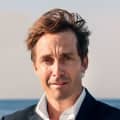
Martin Hager
Editor in Chief YACHT