Air conditioning, Anchor, Antifouling, Autopilot, Battery, Battery charger, Bilge pump, Bimini top, Bow anchor windlass, Bow thruster, CD player, Chartplotter, Cockpit speakers, Compass, Davits, Deck shower, Depth sounder, Electric stove, Electric toilet, Fire extinguisher, Fire suppression system, Fishfinder, Flybridge cover, Fridge, GPS, Gangway, Generator, Grill, Heating, Hot water system, Integrated swim platform, Inverter, Life raft, Microwave, Navigation lights, Pressurized water system, Radar, Radio, Shore power, Sink, Solar power system, Speedometer, Stove with glass-ceramic cooktop, Swim ladder, TV, VHF radio, Washing machine, Wind gauge
Note
The young yacht architect David Marsh was commissioned to design a stylish, fast motor cruiser with good seagoing characteristics. The Power 50 is the result.
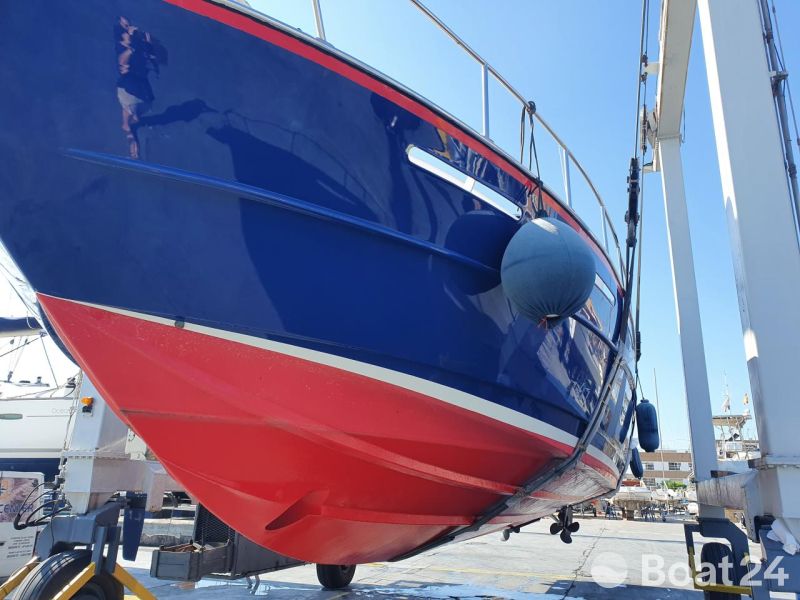
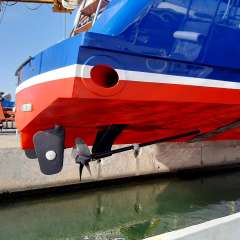
High tensile steel medium/deep-V semi-displacement/planning hull constructed by CroftMarine scantlings to Lloyd’s of Londen and American Bureau of Shipping requirements. (High tensile steel is 25% stronger than conventional steel).
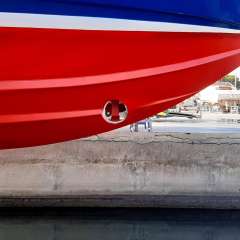
A polyester superstructure has been placed on the steel hull of the Power 50. This combination was chosen so that the strength of the steel hull could be combined with the multifaceted, supple curves possible for a polyester superstructure. 4-millimeter-thick naval steel was used for the sharp V-hull. Below a flat deckline is a forward-sloping chine. Low bulwarks form a good starting point for the flowing line of the superstructure. An aft cabin with a raised deck above was chosen to maximize interior space. When the Power 50 is in port, the lines suggest hidden speed.
The high quality of the Power 50 is evident as soon as you see it. The deep blue of the hull has an intensity and sheen that you only get with very good paint. Every component of the steel hull is carefully finished, and the stainless steel gunwale on the bulwark is particularly striking.
Premier has chosen the opposite approach by keeping the styling, particularly of the interior, relatively conservative. From the outside, the boat has enough character to be recognizably different, without going to extremes. It looks practical and 'nautical', and the quality is directly visible.
The Premium Power 50 proves that steel is a viable alternative for the planing motorboat.